Newsletter

ASPIRE Center Newsletter Registration
This resource links to the ASPIRE Center’s newsletter registration page, which also includes links to read past issues.


This resource links to the ASPIRE Center’s newsletter registration page, which also includes links to read past issues.
Eco-Healthy Child Care® is an award-winning, evidence-based program developed by the Children’s Environmental Health Network (CEHN). This program helps childcare professionals eliminate environmental hazards found in childcare facilities to create safer, healthier learning centers for children and childcare providers.
This resource directs viewers to a playlist of Naturely Enviro-Natal Health Equity Symposium videos by the OSU ASPIRE center.
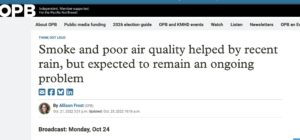
In this article, which also includes an interview recording, Molly Kile, an environmental epidemiologist and the ASPIRE Administration Core Lead and Co-PI, joins other guests to discuss the impact of smokey air on young lungs.
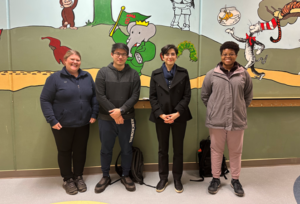
ASPIRE awardees helped protect children by monitoring air quality in schools and community sites, paving the way for EPA-funded wildfire smoke preparedness efforts.
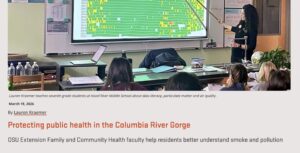
This Oregon State University, College of Health article features OSU Extension Family and Community Health faculty member and ASPIRE Center pilot project awardee, Lauren Kraemer, MPH, associate professor of practice. The article notes how Lauren and her community partners worked together to secure grant funding to improve air quality monitoring
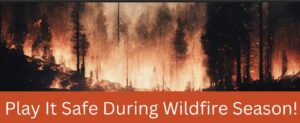
This infographic provides resources to help athletes and/or their caregivers determine if it is best to adjust outdoor practice/events due to air quality concerns.
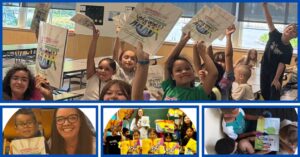
ASPIRE awardee created a bilingual kids’ book empowering Latinx families with tools to reduce wildfire smoke risks, shared through schools, fairs, and home visits.
In this video, OSU ASPIRE Children’s Environmental Health Center pilot project awardees share how they are working to protect kids’ health where they live, learn, and play!
The Ignite Children’s Environmental Health Research Colloquium, “Protecting Children’s Environmental Health: Research to Action” event was an opportunity to promote collaborations and stimulate thought between academia, community partners, and organizations in the field of children’s environmental health. The rapid presentation style is designed to “Ignite” the audience about research ideas,
In honor of March being National Nutrition Month, the ASPIRE newsletter shared tips and resources on how to get kids to embrace healthier foods. It also shared tips and linked resources related to eating healthy on a budget. In addition to sharing nutrition-related information, the March ASPIRE newsletter shared tips
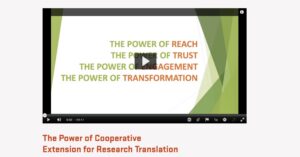
This webinar features two national Cooperative Extension leaders discussing the vital role of extension in research translation to promote health and well-being in communities. It is hosted by Allison Myers, PhD, MPH from the ASP3IRE Center Translation Core.
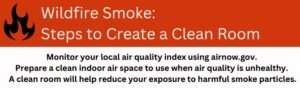
This resource provides instructions on how to provide a clean indoor air space when air quality is unhealthy.

This resource provides a link to the Air and Our Health podcast. From this link, you can navigate to Apple Podcast, Spotify, or wherever you get your podcasts, and listen to the March 28, 2022, Air and Our Health episode titled, “The Fire Inside – Gas Stoves, NO2 & Health.”
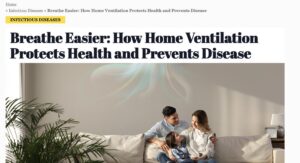
In this article, published in Future of Personal Health, Dr. Meredith McCormack, director of BREATHE, reflects on the risk posed by poor indoor air quality and shares tips about how to reduce exposure to poor air quality. These tips include reducing the use of products that could contribute to indoor

In this episode of the Cancer Matters podcast, Dr. Bill Nelson speaks with Dr. Stacy Cooper about the treatment of pediatric leukemia.
This resource provides a link to Episode 111 of Johns Hopkin’s Public Health On Call podcast, which features BREATHE center faculty member Dr. Panagis Galiatsatos. You can access the podcast directly on the link provided below, or listen to the episode on Apple Podcasts or Spotify.
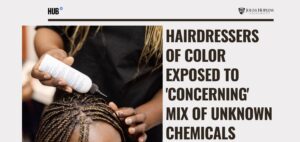
This resource provides a link to an article, which discusses a study that found that hairdressers of color, compared to women who work in offices, have higher levels of chemicals in their bodies—some associated with salon treatments but also many more the researchers couldn’t identify.
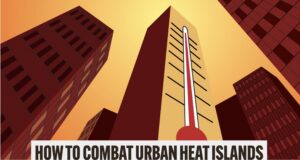
This resource provides a link to a 2021 article published by Johns Hopkins Magazine, which discusses urban heat islands. The article features Dr. Meredith McCormack, director of CHARTER.
This resource provides direction to BREATHE’s resource webpage, which includes infographics focusing on a wide range of topics including indoor allergens, nutrition, wildfire smoke, asthma, and more.
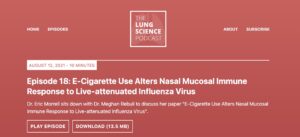
In this podcast, Dr. Eric Morrell sits down with Dr. Meghan Rebuli to discuss her paper “E-Cigarette Use Alters Nasal Mucosal Immune Response to Live-attenuated Influenza Virus”.
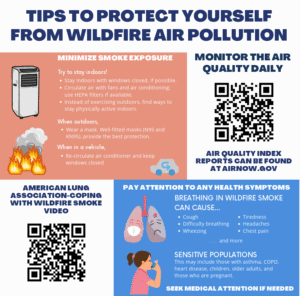
This infographic helps teachers, parents, and youth protect little lungs from wildfire smoke with actionable tips


For Emory MD/PhD candidate Jasmin Darville, maternal and child health is more than an academic interest. It’s a calling shaped by her lived experience, clinical training, and a deep commitment to Black mothers and babies.
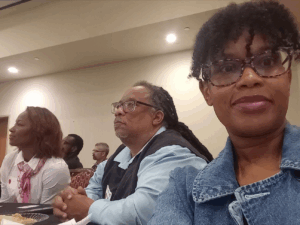
Dr. Llewellyn Cornelius from the University of Georgia School of Social Work secured CHARTER pilot funding to engage local youth in assessing community health and well-being.
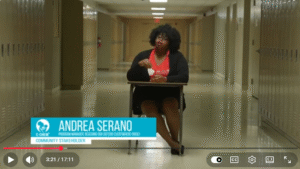
The Center for Children’s Health, the Environment, the Microbiome, and Metabolomics (C-CHEM2) examines how environmental exposures affect infants during pregnancy and after birth. Specifically, C-CHEM2 researchers are studying the complex interactions of toxicant exposures, the microbiome, and the metabolome and their impact on birth outcomes and infant health and neurodevelopment
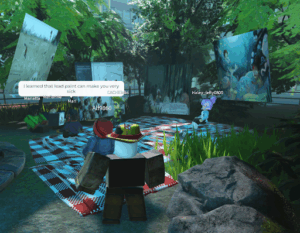
CHARTER joined the nationwide celebration of Children’s Environmental Health (CEH) Day in 2025 with two exciting events designed to engage, educate, and empower families.
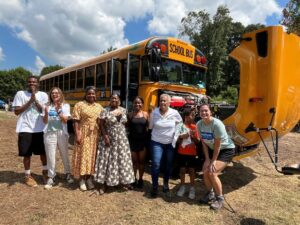
Dr. Preeti Jaggi, Professor of Pediatrics at Emory University and her team have built a state-wide movement to expose the critical link between clean air and children’s health.

In this podcast episode, Dr. Sandy Cesario, Dr. Shakira Henderson, and Dr. Shawana Moore discus personal stories of nursing resilience, and the ways in which they’ll be celebrating Nurses Week.
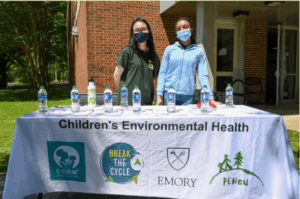
Emory Nursing’s CHARTER project teamed up with Science for Georgia and several other environmental groups to organize and host an environmental health and climate conference in Valdosta, Georgia, in June 2025. This event brought together groups from around the state to share ideas and build stronger partnerships around environmental health.

This resource provides access to the fall 2022 issue of the Emory Nursing magazine, which is titled “Caring for the Future – Students: The Heart of the New Emory Nursing Learning Center.”

This resource provides a link to the YouTube channel for Emory University’s Nell Hodgson Woodruff School of Nursing, home of CHARTER. The channel posts a variety of videos that are excellent resources for nursing professionals, current students, and prospective students.
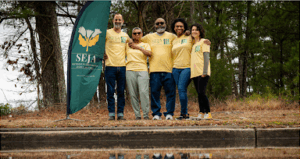
Science for Georgia secured a CHARTER translational planning grant to to show public environmental data alongside community information using GIS mapping.
This article features Dr. Carmen Marsit, Director of CHARTER’s development core, and Dr. Amina Salamova, a CHARTER pilot grantee. The article highlights some of the public health triumphs, such as the Food Safety Modernization act, the Safe Drinking Water Act, and the Back to Sleep campaign, which continually work to
This resource is an informational video, which discusses common environmental health hazards in the home and provides tips on how to transition to safer practices and products.
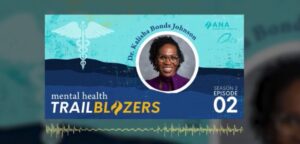
In this podcast episode, the host of the podcast “Mental Health Trailblazers, Psychiatric Nurses Speak Up” speaks with Dr. Kalisha Bonds Johnson, PhD, MSN, RN, PMHNP-BC. Dr. Bonds Johnson is currently an Assistant Professor, Tenure track at Emory University’s Nell Woodruff School of Nursing. Her research focuses on the mental
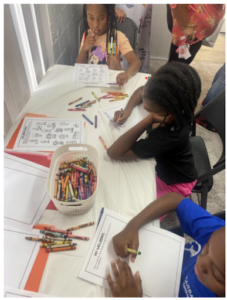
Asthma forum in Gloster, MS empowers families with tools to manage asthma, raising awareness of pollution’s impact on children’s health.
This toolkit includes health posts and reels that you can use and share on your own accounts.

Connecting the Dots (CTD) is a family-centered approach that uses home visiting and coaching to connect families with resources to improve overall family well-being. In CTD, families are engaged during the mother’s prenatal period and continue through the child’s first two years of life. CTD navigators (Social Workers) will work
“The Hidden Nurse: How to Become a Public Health Nurse” is intended for individuals who want to know more about nursing as a profession, the importance of public health nursing, and how to become a public health nurse.
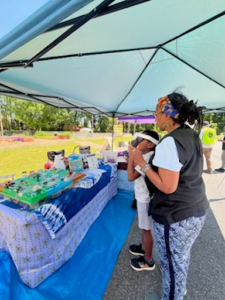
Explore CHARTER’s VR hurricane experience from East Point, Georgia’s Earth Day event—learn, prepare, and build resilience for extreme weather.
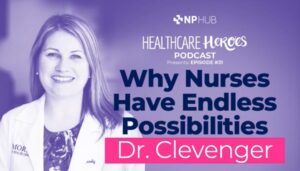
Dr. Carolyn Clevenger is a gerontological nurse practitioner, Professor and Associate Dean for Transformative Clinical Practice at the Nell Hodgson Woodruff School of Nursing at Emory University. Dr. Clevenger serves as the Clinical Director and a practicing nurse practitioner at the Emory Integrated Memory Care Clinic. She earned her BSN

This resource provides access to the webpage of NYU Langone’s Center for the Investigation of Environmental Hazards Collaborative Center in Children’s Environmental Health Research & Translation.
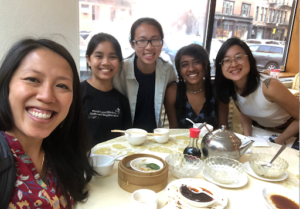
Chinatown residents gain tools to fight environmental injustice through CEHRT-funded climate education, data-sharing, and culturally relevant workshops.
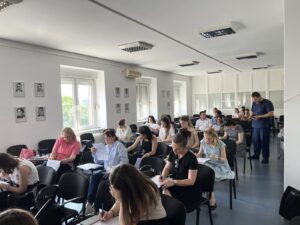
Dr. Aleksandra Buha has successfully developed and initiated a prenatal environmental health education intervention to reduce maternal and infant exposure to endocrine-disrupting chemicals with the help of the CEHRT grant at the University of Belgrade.
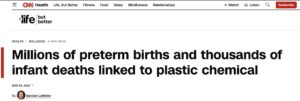
On March 30th, 2026, CNN published an article titled “Millions of Preterm Births and Thousands of Infant Deaths Linked to Plastic Chemicals,” which highlighted a recent study co-authored by Dr. Leonardo Transande, director of the Center for the Investigation of Environmental Hazards at NYU Langone Health. The study quantified the

This resource provides a link to a YouTube playlist, which includes four videos from the PRCCEH center.
In this 8-week Saturday morning program, 12 high school students will learn about EDC research and how they can select safer personal care products. Participants will collaborate with University of Pennsylvania researchers, learn how to read labels and study the impacts of EDCs on human health. To finish this program,
This resource provides free access to factsheets related to air quality-related environmental exposures.

This resource provides free access to factsheets about asbestos exposures.
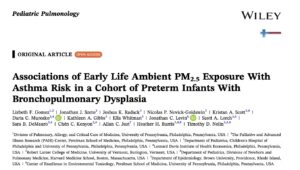
Three members of PRCCEH, Dr. Scott A. Lorch, Dr. Heather H. Burris, and Dr. Timothy Nelin, recently collaborated with 13 other authors to publish an article that examined weather exposure to fine particulate matter during the first year after discharge from the NICU for infants with bronchopulmonary dysplasia (BPD) is
This study, authored by Dr. Jane Clougherty and a team of researchers from PRCCEH, focuses on the air pollutants in the efficacy of asthma treatments in Black children, who experience a higher disease burden than children from other racial groups. The study assessed 224 Black children who were randomized to
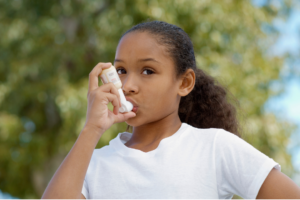
In Chester, CAPP empowers families to fight asthma. 99 homes reached, CHWs provide meds, training & support where it’s needed most.

This curriculum unit is designed for 12th grade Social Science classes to learn about
environmental overburden in vulnerable communities and investigate why these communities get stuck with the burden.
This resource provides free access to a curriculum aimed at teaching students in Grades 5-8 about the water cycle. Understanding the water cycle is foundational to understanding the challenges of flooding in cities like Philadelphia and in developing strategies to enhance resilience. This unit guides students through the nexus of

Built to Last + PRCCEH: Safer homes, healthier families. Environmental consults cut asthma flares, lead risks & boost well-being in Philly households.

This curriculum unit examines America’s use of lead and will empower students to express their desire to take action for better practices in dealing leftover lead.
In February, a handful of PRCCEH research members collaborated with other authors from the University of Pennsylvania’s Perelaman School of Medicine to publish results of their study, which found that exposures to endocrine disrupting chemicals (EDCs) can have adverse neurological and neurodevelopmental effects at doses well below commonly studied levels.
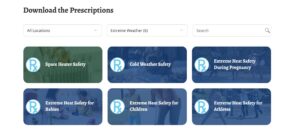
This resource provides free access to factsheets related to extreme weather.
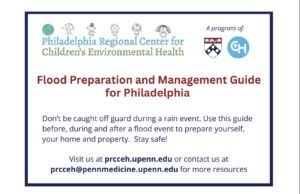
This resource provides free access to a guide that is designed to help users prepare for a flood event.
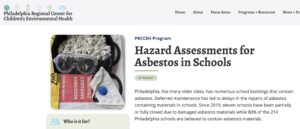
In partnership with the Philadelphia Healthy Schools Initiative, PRCCEH has designed a program to use federally required Asbestos Hazard Emergency Response Act (AHERA) reports on the condition of asbestos in each school and analyze the hazard that it poses.
In this article, Dr. McCormack, director of the BREATHE center, shares how children are more susceptible to air pollution due to their lung size, which leads to comparatively greater doses of exposure to pollutants relative to their body size. She also provides a handful of recommendations for reducing pollutant

This curriculum unit teaches English Language Learners about the water contaminants and the health risks
associated with contaminated water worldwide. Students will learn strategies to reduce lead exposure in their homes and their local cultural communities.
This resource provides access to a free webinar series for teachers in the Philadelphia region and beyond.Sessions explore how extreme weather is affecting temperature, air quality and water in Philadelphia, with a focus on children’s health. Free lesson plans and a curriculum are also linked!
This resource provides free access to factsheets about exposures to lead.
This resource provides free access to a unit plan designed for the high school course, AP Environmental Science.
Dr. Derek Shendell, PRCCEH research member and professor in the Department of Environmental and Occupational Health and Justice at the Rutgers School of Public Health, recently co-authored a study that provided training to New Jersey public secondary school teachers and asked them to complete online surveys about safety and
This resource provides access to a brochure, which gives a high level overview of the PRCCEH center.

This resource provides a link to an archive of past PRCCEH newsletters as well as a link to join the PRCCEH mailing list.
This resource is a youtube playlist that is comprised of recordings of seminars hosted by the Philadelphia Center for Children’s Environmental Health. Seminars feature a variety of speakers and cover a variety of children’s environmental health topics.
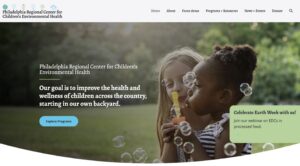
This resource provides a link to PRCCEH’s website, which includes webpages on each of the center’s focus areas, its programs and resources, and news and events.
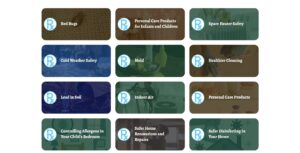
This resource provides free access to factsheets for a variety of environmental exposures.
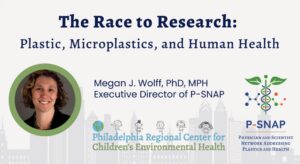
In this webinar, Dr. Megan J. Wolff presented a lecture on what is known and what is being researched about the impacts of plastics on human health. She also highlighted how children’s health can be impacted by exposures to plastics and delved into what solutions exist. Dr. Wolff is the
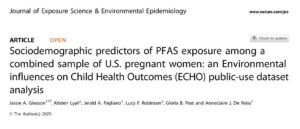
In December of 2025, PRCCEH members Dr. Kristen Lyall and Dr. Anneclaire J De Roos collaborated with four other authors to publish a study, which evaluated differences in exposure to 14 Per- and polyfluroalkyl substances (PFAS) by sociodemographic factors amongst pregnant women in the U.S. The study found that higher

This brochure guides Philadelphia property owners, businesses, and associations on how to request to plant a tree in their neighborhood.
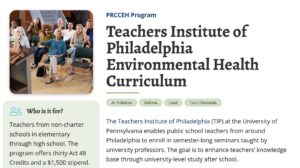
The Teachers Institute of Philadelphia (TIP) at the University of Pennsylvania enables public school teachers from around Philadelphia to enroll in semester-long seminars taught by university professors.The content will include the PRCCEH Center’s focus areas: asthma, air pollution, lead and endocrine disrupting chemicals. This resource provides a link to be
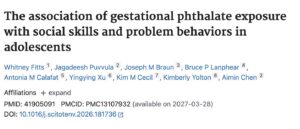
This recent study was co-authored by Dr. Aimin Chen, Co-Director of PRCCEH and Professor of Epidemiology in the Department of Biostatistics, Epidemiology, and Informatics at the University of Pennsylvania Perelman School of Medicine. Researchers analysed maternal urine samples from parent-offspring pairs recruited between 2003 and 2006, which were collected at
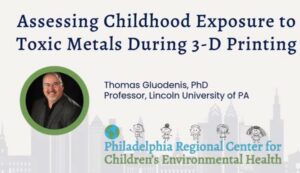
Thomas Gluodenis, PhD, Professor at Lincoln University of PA discusses his pilot project research into potential toxic metal exposure from the 3-D printing process. This research was funded by the Philadelphia Regional Center for Children’s Environmental Health.
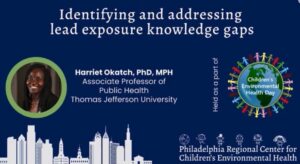
Harriet Okatch, PhD, MPH, Associate Professor at Thomas Jefferson University, speaks about her experience implementing a lead education program to youth and trying to communicate lead education to the public. This project was part of Harriet’s PRCCEH pilot project funded in 2024-2025.
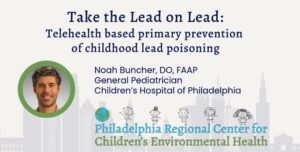
This resource features a presentation by Noah Buncher, DO, FAAP, General Pediatrician at the Children’s Hospital of Philadelphia, South Philadelphia Clinic. Dr. Buncher discusses his past and current pilot projects on telehealth education and primary prevention of childhood lead poisoning.
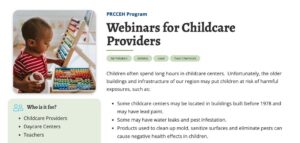
This resource provides a link to a PRCCEH webpage, which allows free access to webinars that childcare providers can watch to learn more about how to protect the health of their students. Each webinar will focus on an environmental health topic relevant to childcare providers throughout PA, such as the


In this High School LA Times article, author Emily Estrada shares how residents in Maywood California are concerned about contamination of a nearby toxic site the their neighborhood.
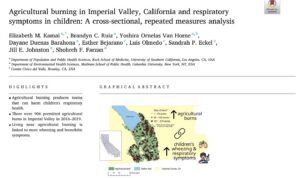
Smoke from the burning of agricultural fields can contain air toxins. This study examines the relationship between agricultural burning, individual-level exposure to agricultural burn smoke, and parent-reported respiratory symptoms in children.
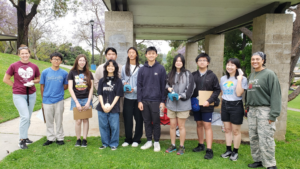
USC CEHRT partnered with Asian Pacific Island Forward Movement to teach youth in polluted communities how to monitor air quality and advocate for cleaner air.

This resource explains the background and goals of the Be Heard webinar series and includes a link to watch past webinar recordings.
Air pollution, particularly fine particulate matter (PM2.5), poses significant health risks, especially in disadvantaged communities with limited air quality monitoring. This study evaluates PM2.5 concentrations in the San Gabriel Valley cities of Alhambra and Monterey Park
through two community-engaged research efforts: (1) monitoring PM2.5 levels at identified pollution hotspots
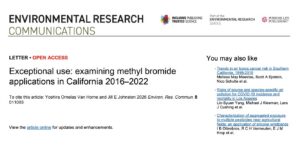
Dr. Jill Johnston, Co-director of SC-CEHRT, and Dr. Yoshira Ornealas Van Horne, a previous pilot project awardee, published a study on methyl bromide applications in California. Methyl bromide (MeBr) is a developmental, neurologic, and respiratory toxicant that has historically been used as a pesticide, herbicide, and fungicide in the shipping
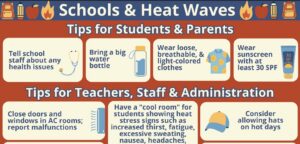
This infographic provides tips for students, parents, teachers, and community members on how to protect health during heat waves.

The Southern California Environmental Health Sciences Center (SCEHSC) is a collaborator of the Southern California center for Children’s Environmental Health Translational Research Translation. This resource provides a link to the SCEHSC infographics webpage.

University of California Irvine’s (UCI) Community & Environment Research Lab is a collaborator of SC-CEHRT. This resource provides a link to the Community & Environment Research Lab’s infographic webpage.
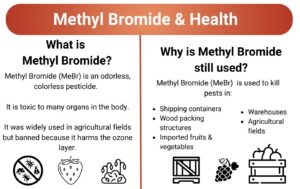
Methyl bromide (MeBr) is a developmental, neurologic, and respiratory toxicant that has historically been used as a pesticide, herbicide, and fungicide in the shipping and storing of goods. MeBr was set to phase out of use by 2005, but the Clean Air Act allows for certain exemptions. This infographic provides
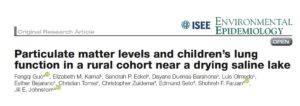
Dr. Jill Johnston, Co-director of the Southern California Center for Children’s Environmental Health Research Translation, recently co-authored an article titled, “Particulate matter levels and children’s lung function in a rural cohort near a drying saline lake,” alongside a team of researchers from University of Southern California (USC), UC Irvine, University
This resource provides access to a study conducted by researchers from the University of Southern California and Columbia University. It is one of the first studies to describe how Latina mothers perceive and experience environmental health risks during pregnancy and early childhood.
This study — which was co-authored by SC-CEHRT Co-Director, Dr. Rob McConnell — examined the associations of temperatures during pregnancy on autism diagnoses across a retrospective birth study cohort that followed 294,937 children from 2001 to 2014 and recorded if autism was diagnosed by age 5. Maximum and minimum day
This recent study was also co-authored by SC-CEHRT Co-Director, Dr. Rob McConnell. It utilized a pregnancy cohort from the Kaiser Permanente Southern California Healthcare system to investigate the effect of prenatal wildfire exposure on autism development in offspring by comparing mean wildfire PM2.5 concentration, number of days of smoke exposure,
This resource provides access to a study conducted by researchers in the Division of Environmental Health at USC and Kaiser Permanente Southern California. The study investigates the association between air pollution and COVID-19 severity.
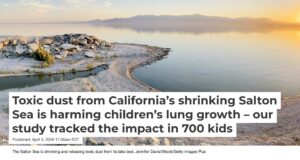
On April 3rd, the Los Angeles Times published an article titled “For Water and Mining Policy Near the Salton Sea, Keep in Mind Local Children’s Health” and The Conversation published an article titled, “Toxic Dust from California’s Shrinking Salton Sea is Harming Children’s Lung Growth — Our Study Tracked the
This webinar is part of the BeHeard Series. It is hosted by SC-CEHRT Co-Director, Dr. Jill Johnston, and features Erin Haynes, DrPH, MS and Misti Allison, MPH.
This webinar was a part of the Be Heard! Seminar Series. In this webinar, Dr. Lanphear, Dr. Tamayo-Ortiz, and Dr. Buralli discussed best practices for leveraging social media for health communication. This webinar was in collaboration with the International Society For Children’s Health and the Environment, University of San Paulo,

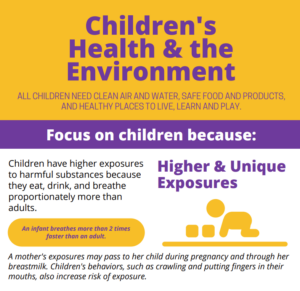
This factsheet covers the basics of children’s environmental health, why it matters, who it impacts, and how we can protect kids’ health.
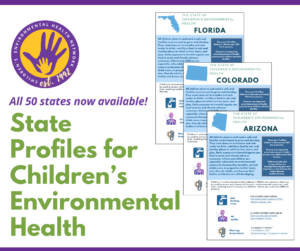
Where children live, learn, play, and work can influence their health. This is especially pertinent at the community or neighborhood level, but state level information can be informative as well.
Multiple factors can contribute to a state’s environmental health profile, including: regional, geographic, and meteorological conditions; population sizes; economies; major
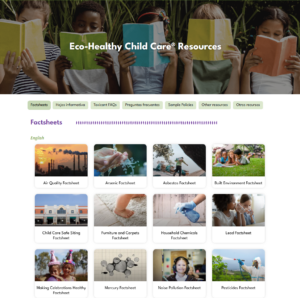
Eco-Healthy Child Care® factsheets and FAQs to help child care providers identify and reduce health hazards in learning environments. Available in English and Spanish.
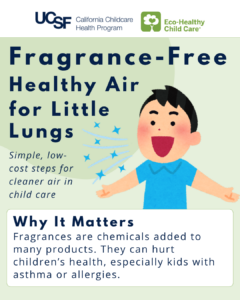
Infographic in Spanish and English for childcare providers with simple, low-cost steps to cleaner air by reducing exposure to fragrance chemicals.
This presentation helps healthcare providers understand the following principles of
toxicology at each stage of development:
– Environmental sources of exposure to toxicants
– Routes of absorption
– Metabolism of toxicants
– Distribution to target tissues
– Sensitive target tissues
– Health effects
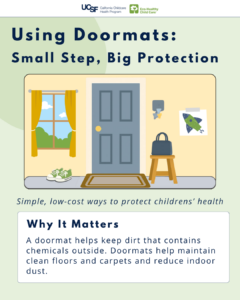
Infographic in Spanish and English for child care providers with simple, low-cost steps to protect kids’ health using doormats to catch dirt and chemicals.