How to Combat Urban Heat Islands - The BREATHE Center Investigators’ Work to Model and Mitigate Dangerous Heat Islands in Baltimore City
The Bridging Research, Lung Health, and the Environment Children’s Center (BREATHE)
Johns Hopkins University
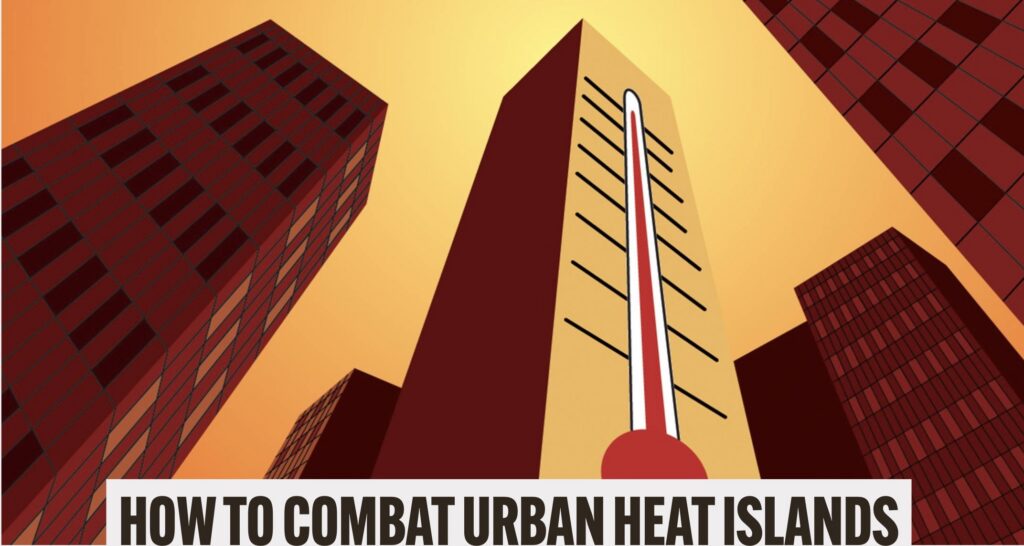
Urban heat islands occur when areas are exposed to high heat, which becomes absorbed by building materials such as asphalt and concrete during the day and is radiated back out into neighborhoods at night. These islands pose a health risk to communities living within them because high heat and humidity can trigger asthma symptoms and traps pollutants that irritate the airways. Urban heat islands are especially prevent in neighborhoods that don’t have the vegetation to keep temperatures down, and whose residents are without reliable air conditioning or may not use their air conditioning due to concerns over electric bill costs.
Follow the link below to learn more about urban heat islands and Dr. McCormack and Dr. Waugh’s project to design a computer program that calculates heat dangers across Baltimore neighborhoods and assesses various mitigation approaches.