Advancing Maternal Health Through Generative Report Back

Center for Children’s Health Assessment, Research Translation, and Combating Environmental Risk (CHARTER)
Emory University and University of Georgia
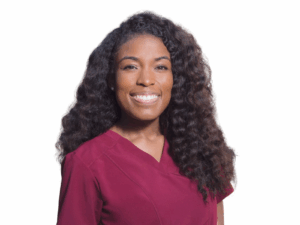
Featuring: Jasmin Darville, MD/PhD Candidate, CHARTER Pilot Awardee
For Emory MD/PhD candidate Jasmin Darville, maternal and child health is more than an academic interest. It’s a calling shaped by her lived experience, clinical training, and a deep commitment to Black mothers and babies. Her early work in rural Ecuador revealed a powerful truth: the health of a community mirrors the health of its mothers and children. That understanding has guided her path through medical school, research training, and now into innovative work to translate her research findings in partnership with research participants, supported by a CHARTER pilot award.
While completing the first three years of medical school, Darville witnessed stark disparities in outcomes for Black women during her clinical rotations. She also saw a major gap in biomedical research: despite collecting extensive data from participants, researchers rarely return results to the communities that make the science possible. Less common are culturally informed approaches that center the experiences and priorities of Black women. Her pilot project seeks to change that.
Building a New Model: Generative Report Back
Darville’s work introduces a framework she calls generative report back: a bidirectional process where researchers share findings with participants, and participants help shape how those findings are understood, contextualized, and communicated back to their communities.
Supported by a CHARTER translational planning grant ($5,000), Darville partnered with 12 long-term participants from the Atlanta African American Maternal Child Cohort, many of whom had been involved for nearly a decade without ever receiving study results. Through focus groups and collaborative planning sessions, Jasmin’s “report back planning partners” reflected on what meaningful communication of research findings can and should look like.
Her team identified seven major qualitative themes within 4 domains: Preferences for Session Format, the Need for Racial and Cultural Congruence Among Facilitators, Visual and Narrative Data Preferences, and the Importance of Community-centered Translation. One message came through clearly: report back is not the end of the research process–it is only the beginning of community knowledge-building.
“Moms told us that receiving this information wasn’t just for them,” Darville shared. “They see themselves as responsible for bringing it back to their communities. Our role is to help make that possible.”
Impact and Momentum
The pilot award became a pivotal milestone in Darville’s training and trajectory. It strengthened her application for and helped her secure the competitive NIH F30 fellowship. It also enabled the team to compensate mothers as respected partners, reinforcing the project’s core value of equity. She has now secured continuing funding from CHARTER for a translational implementation award for 2026 to continue her work.
What’s Next: Scaling to “Echo Back”
Darville is now preparing to launch the next phase of her work, called “Echo Back”, which will expand engagement to 50 or more mothers and co-develop accessible report-back materials for broader dissemination within the ECHO cohort and beyond. The goal is to create a scalable, repeatable model that can support researchers across disciplines as they integrate community-driven report back into their work. “This phase is about keeping the connection alive,” Darville says. “It’s about inviting mothers into the creative process of science, because their insights make the science stronger.”
Darville’s work aligns deeply with CHARTER’s mission to advance equitable research translation. As she continues to build this framework, she emphasizes partnership, creativity, and care as essential components of scientific practice.
“Our participants are not just subjects,” she says. “They are cultivators of community health. This work is about honoring that truth.”